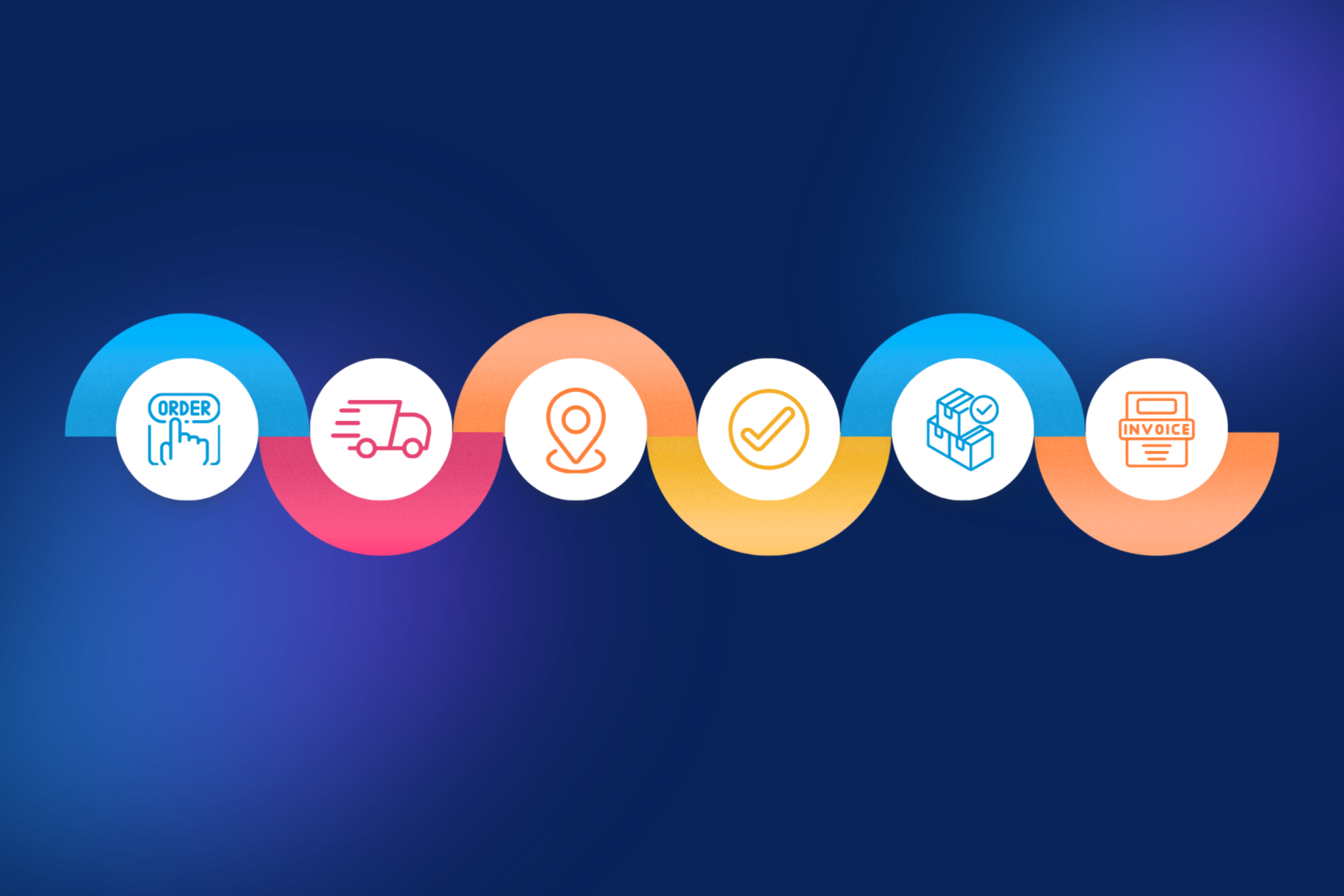
Transport workflow management is the structured process that moves a freight job from the moment an order lands on your desk to the moment the invoice clears your accounting system. It sounds simple enough. But if you run a fleet or manage operations for a heavy transport business, you already know the reality is far more tangled.
Between dispatch, driver coordination, compliance checkpoints, proof of delivery, and billing, each handoff introduces the potential for delays, data gaps, and errors that compound fast. Allotrac builds transport management software specifically to connect these stages into one unbroken flow.
This article breaks down what transport workflow management looks like in 2026, why the order-to-invoice process gets so complex, and how connected systems help you eliminate the bottlenecks between dispatch and payment.
Key Takeaways: What Is Transport Workflow Management in 2026
- Transport workflow management covers every operational step from order intake and dispatch through to invoicing and payment.
- Complexity grows when dispatch, tracking, compliance, and billing run on separate tools that do not share data in real time.
- Handoff failures between drivers, allocators, and finance teams are the primary source of billing delays and revenue leakage.
- Allotrac connects jobs, drivers, compliance, and finance into a single logistics operating system to close these gaps.
- Automating the order-to-invoice cycle reduces re-keying errors, shortens your payment turnaround, and frees up admin capacity.
What Is Transport Workflow Management?
Transport workflow management is the coordination of every task and data exchange that happens between receiving a transport order and collecting payment for it. It covers job creation, allocation, dispatch, driver communication, on-road tracking, proof of delivery capture, compliance documentation, invoicing, and accounting reconciliation.
Each of these stages generates data that the next stage depends on. When a job is dispatched, the driver needs route details and compliance forms. When the delivery is complete, the finance team needs accurate load data and proof of delivery to raise an invoice.
If any stage runs on a separate tool or relies on phone calls and emails, the data arrives late, incomplete, or not at all.
In 2026, transport workflow management increasingly means connecting these stages digitally so that data flows automatically from one step to the next, without re-entry.
Why Does the Order-to-Invoice Process Get So Complex?
The order-to-invoice process in transport is not a straight line. It branches, loops back, and splits depending on job type, customer requirements, compliance obligations, and payment terms. A single multi-leg delivery can involve multiple drivers, varying rate structures, weighbridge dockets, detention charges, and accessorial fees.
According to Global Trade Magazine (2026), logistics firms structurally lose between 1% and 5% of realised earnings before interest, taxes, depreciation, and amortization due to revenue leakage in the order-to-cash process alone. For a mid-sized fleet running hundreds of jobs per week, even the lower end of that range adds up to significant lost income.
The root cause is almost always the gap between what operations records and what finance bills. A driver captures a detention fee or extra drop on the road, but that data does not reach the billing system until someone enters it. By then, details are lost or disputed.
How Dispatch Creates the First Bottleneck
Dispatch is where the workflow begins, and it is often where the first delays take root. When allocators assign jobs through phone calls, text messages, or separate scheduling tools, the rest of the operation has no visibility into what has been assigned, accepted, or rejected.
Drivers may not receive complete job details until they are already en route. This leads to missed compliance forms, incorrect load information, and re-work at the delivery site. Each of those issues ripples downstream into tracking gaps and invoicing errors.
Allotrac's digital dispatch and mobile workflows assign jobs directly to a driver's mobile app, complete with job details, compliance forms, and checklists. This removes the guesswork from the first step and gives allocators real-time confirmation that a job has been received and accepted.
Where Tracking and Compliance Break Down
Once a vehicle leaves the depot, you need to know where it is, whether the driver is meeting compliance requirements, and what data is being captured on-road. If your tracking runs on one system and compliance sits in a filing cabinet, the two data sets never meet.
In Australia, Chain of Responsibility (CoR) laws hold everyone in the supply chain accountable for safety outcomes. That means a missed fatigue check or an incomplete pre-start inspection is not just a driver issue. It is a business-wide compliance risk that can result in penalties for operators and managers alike.
When tracking and compliance data feeds directly into the same system that manages your jobs, you gain a verifiable event history for every load. This is critical for audits, incident investigations, and customer reporting.
How Invoicing Errors Compound Across the Workflow
Invoicing is typically the final step of the transport workflow, but it carries the weight of every upstream decision. If a rate was applied incorrectly at dispatch, the invoice will be wrong.
If a weighbridge docket was not captured digitally, the finance team has to chase it before they can bill.
Allotrac's File Packs feature bundles all supporting documentation, including proof of delivery, dockets, and signed forms, into a single billing package. This means your finance team can raise an invoice with all the evidence attached, reducing disputes and accelerating payment.
The platform's direct integration with Xero and MYOB pushes approved invoices straight into your accounting system. No re-keying, no duplicate entries, and no waiting for end-of-month reconciliation.
What Connected Systems Change About the Workflow
A connected system replaces the handoffs between dispatch, tracking, compliance, and billing with a single data thread that runs from order to invoice. When a driver completes a delivery and signs off on a digital docket, that data is immediately available to the finance team.
This is the core principle behind Allotrac's approach to transport workflow management. Jobs, drivers, vehicles, compliance records, and billing all live in one platform. The result is fewer data gaps, faster invoicing, and a clearer picture of job profitability in real time.
For operations managers and business owners, connected workflows also mean less time spent chasing information between teams and more time focused on growing the business.
What to Look for in a Transport Workflow Management System
Not every transport management system covers the full order-to-invoice cycle. Some focus on dispatch, others on tracking, and others on accounting integration. The challenge is that splitting these functions across multiple tools reintroduces the very handoff problems you are trying to solve.
When evaluating your options, look for a platform that handles job creation, dispatch, mobile driver workflows, real-time tracking, compliance management, and automated billing in a single system. Integration with your existing accounting software is essential to close the loop.
Scalability matters too. A system that works for a 15-vehicle fleet should also handle growth to 50, 100, or more without requiring you to bolt on additional tools. Allotrac.io offers tiered plans designed to grow with your operation, from basic tracking and compliance through to full AI-assisted workflow automation.
In Conclusion: Why Transport Workflow Management Matters More in 2026
Transport workflow management is not a new concept. But the pressure on margins, growing compliance obligations, and the speed at which customers expect invoicing has made it a business-critical priority.
If your dispatch, tracking, compliance, and billing still run on separate systems, you are losing time, money, and visibility with every job.
Connecting these stages into a single workflow is the most direct way to reduce errors, speed up your cash cycle, and give your team the operational clarity they need. If you are ready to see what that looks like in practice, Allotrac's AI-powered platform is built to make it happen.
FAQs About Transport Workflow Management in 2026
What is transport workflow management?
Transport workflow management is the process of coordinating every step from order intake and dispatch through to proof of delivery and invoicing. It ensures that data flows between stages so nothing is lost between allocation and payment.
Why does the order-to-invoice process cause delays?
Delays happen when dispatch, tracking, compliance, and billing operate on separate tools. Each handoff requires someone to re-enter data, and every re-entry creates a chance for errors, missing information, and disputes that slow down payment.
How does Allotrac.io help with transport workflow management?
Allotrac.io connects your jobs, drivers, compliance, and finance into one platform. This means data captured at dispatch and on-road flows directly into billing, so your finance team can invoice faster and with fewer errors.
What is the biggest risk of a disconnected transport workflow?
Revenue leakage. When billable events like detention fees, extra drops, or accessorial charges are not captured digitally at the point of service, they often go un-invoiced. Allotrac.io's digital dockets and mobile data capture help you bill for every service you deliver.
Can a small fleet benefit from transport workflow automation?
Yes. Even a fleet of 10 to 15 vehicles generates hundreds of data touchpoints each week across dispatch, tracking, compliance, and billing. Allotrac.io's tiered plans start with tracking and compliance essentials, so you can automate at a pace that matches your operation.
How does transport workflow management improve compliance?
When compliance forms, fatigue checks, and safety inspections are built into the job workflow, drivers complete them as part of their normal routine. Allotrac.io's integrated compliance tracking gives you a verifiable record for every job, supporting Chain of Responsibility obligations.